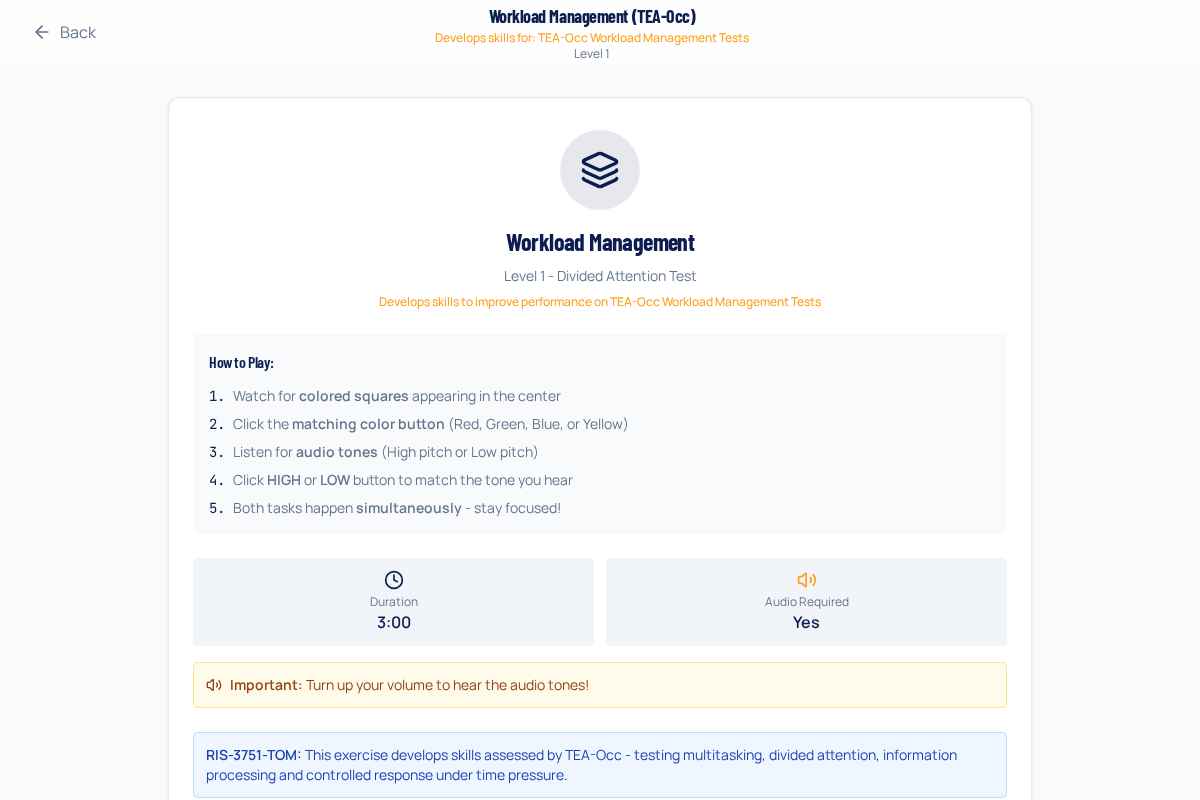
This practice develops workload management: maintaining accuracy while handling multiple information sources. It builds divided attention, prioritisation and controlled response under cognitive load.
Why This Matters for Train Drivers
- Train driving workload changes quickly during disruption or abnormal working.
- Drivers must prioritise safety-critical information first.
- Poor workload management can cause missed cues or rushed decisions.
- Strong candidates stay structured when demands increase.
Real-World Examples
- •Managing radio communication while monitoring the line ahead.
- •Checking in-cab information during a complex approach.
- •Responding to an alert without losing the main driving task.
- •Separating urgent safety information from background workload.
RIS-3751-TOM Standard
RIS-3751-TOM defines divided attention as switching between information sources and performing tasks in parallel, with TEA-Occ listed as an attention assessment method.
Pro Tip to Improve
Always identify the primary safety-critical task. Deal with secondary information without allowing it to take over your attention.
This practice exercise develops the cognitive abilities assessed in official train driver selection, specifically:
Divided attention and workload assessments used in train driver selection
Based on RIS-3751-TOM requirements. Learn more about official assessments →
Level 1
Premium
Level 2
Premium
Level 3
Premium
Level 4
Premium
Level 5
Premium
L.C.
H.H.
B.M.
P.K.
N.J.