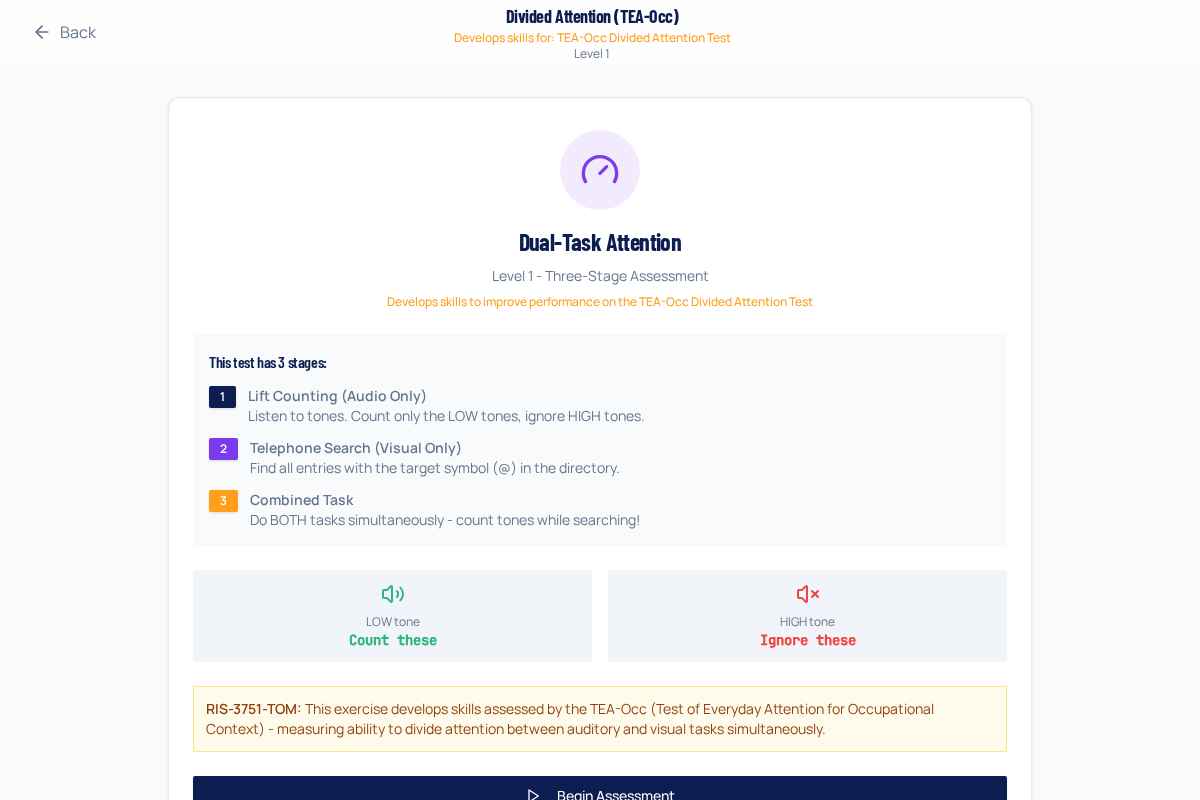
This practice develops divided attention: the ability to switch attention between different sources of information and maintain performance across concurrent demands. It is not about doing everything at once; it is about controlled attention switching.
Why This Matters for Train Drivers
- Drivers monitor external signals, in-cab displays and auditory cues together.
- Workload increases during disruption, degraded working and abnormal situations.
- The safest candidates maintain the primary task while responding to secondary information.
- Recovery after a missed cue is part of the skill being assessed.
Real-World Examples
- •Monitoring lineside information while checking the speedometer.
- •Listening to an instruction while maintaining situational awareness.
- •Responding to an alarm without losing control of the main task.
- •Managing several sources of information during a station approach.
RIS-3751-TOM Standard
RIS-3751-TOM defines divided attention as switching attention between sources of information and performing different tasks in parallel, with TEA-Occ listed under Attention.
Pro Tip to Improve
Practise structured switching. Know which task is primary, respond calmly to secondary cues, then return immediately to the main task.
This practice exercise develops the cognitive abilities assessed in official train driver selection, specifically:
Divided attention assessments (e.g., TEA-Occ style tests)
Based on RIS-3751-TOM requirements. Learn more about official assessments →
Level 1
Premium
Level 2
Premium
Level 3
Premium
Level 4
Premium
Level 5
Premium
M.R.C.
D.K.
F.A.V.
J.Y.
P.